
What Is Bear Pose in Yoga? Understanding the Different Poses Called Bear Pose

Becca is the author of Teaching Yoga: Creative Cueing for Safer Mixed Level Classes. A long-time studio owner and teacher trainer, she now teaches in OKC and creates resources for other yoga teachers.
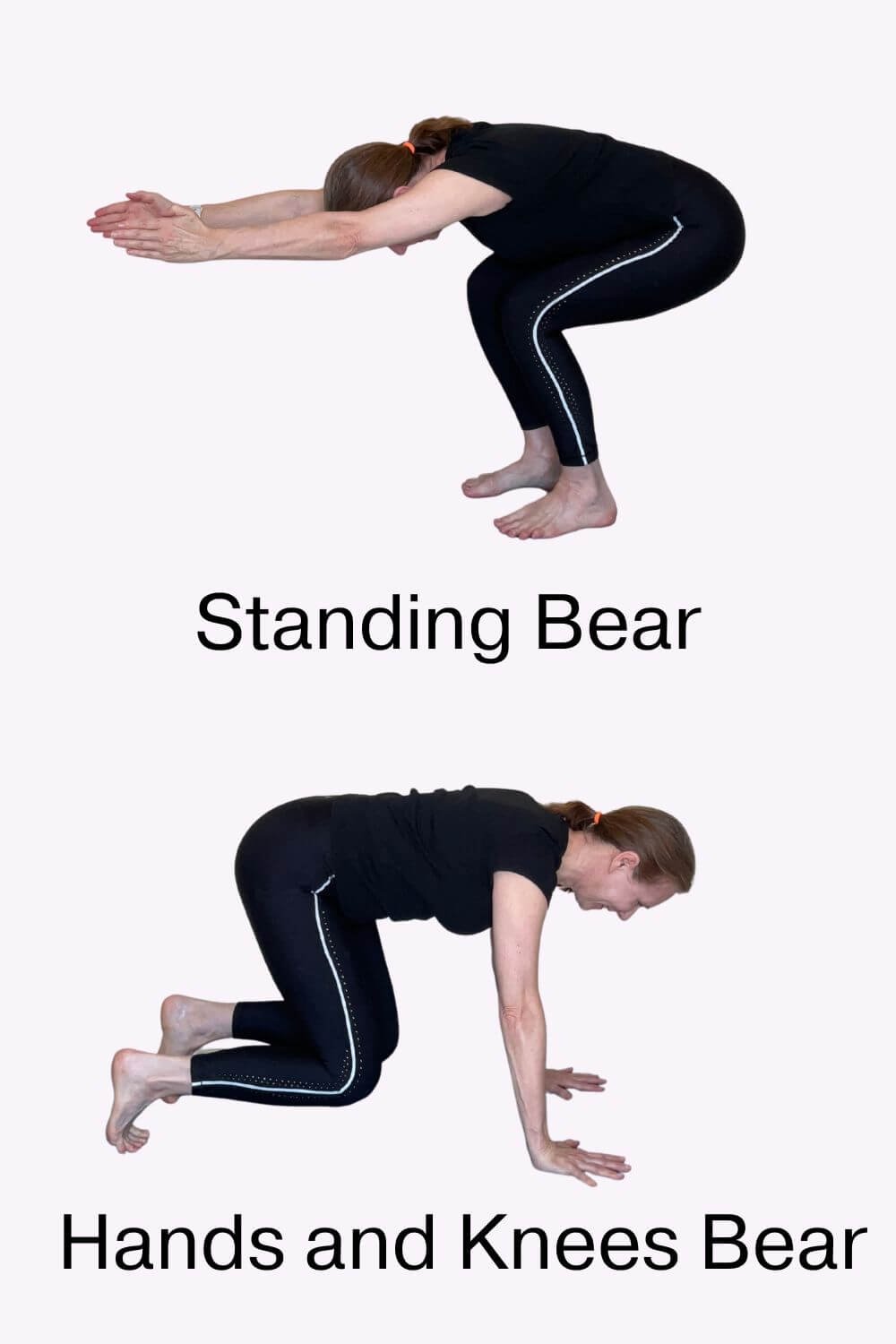
When searching for information about Bear pose, I realized we now have 3 entirely different-shaped poses that teachers might refer to as Bear pose. I decided to do some research, take a look at some of my very old yoga books, and try to figure out the history of these poses. If you search “Bear pose yoga,” you will likely find references to a Bear pose on the hands and knees, another that looks like a variation of Chair, and a third pose often referred to as Balancing Bear (in the same family of poses as Boat). In this article, I’ll show you these common poses, how to practice them, and what I’ve learned about their history. I’ll also tell you which ones I think should actually be called Bear!
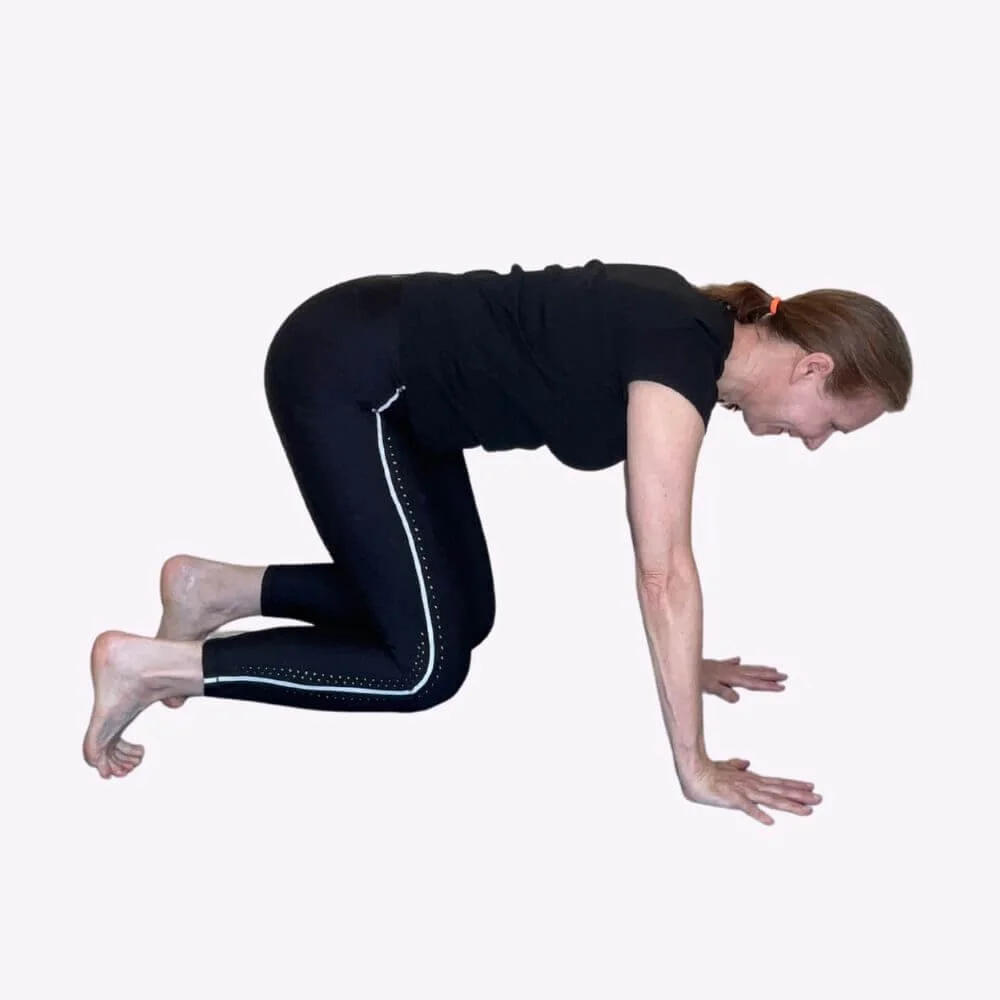
Practicing the Hands and Knees version of Bear Pose
Sanskrit: Most online yoga databases call this pose Bhallukasana.
This pose is a great example of a popular fitness move being adapted into the yoga world. It was not part of the yoga curriculum in the early 2000s when I attended teacher training, and it is not in Iyengar’s classic Light on Yoga from 1966. I first learned an exercise similar to this in Pilates called Floating Cat. In Pilates, the exercise involves a rounded back, as in the Cat pose. In yoga, it is taught with a neutral spine. Pilates teachers began teaching variations of the Floating Cat, and then others in the functional fitness movement popularized it. As more teacher training programs add this neutral-spine version to their manuals, it is gaining ground as the best-known Bear pose. In some cases, it may be called “Hovering Bear”.
How to Practice this version Bear Pose
Start on hands and knees with the hands under the shoulders and the knees under the hips.
Lengthen the spine
Hold your head and neck in line with your spine.
Toes may be turned under or not.
Engage your core, lifting your low belly in and up.
Press evenly into the hands
Lift the knees off the mat slightly
Maintain a neutral spine as you hold the pose.
If a student struggles to lift the knees, offer Birddog (also called Opposite Arm Leg Balance in Pilates).
Common Issues to Correct
The issue students struggle with the most in this version of Bear is keeping a neutral spine. If their posture isn’t great to begin with, they will round their shoulders forward, rounding their upper back as they try to hold the pose. In this case, bring them back to hands and knees and ask them to drop their chest some to bring the shoulder blades onto the back and open the chest. Then ask them to imagine magnetizing their shoulder blades to the back, and then try lifting the knees again.
Benefits of Bear Pose on Hands and Knees
Practice this version of Bear for core strength, spinal stability, and stronger shoulders and wrists.
Core strength
Shoulder stability and strength
Spinal strength and stability
Wrist strength and flexibility
Focus and endurance
Practicing the Standing Version of Bear Pose
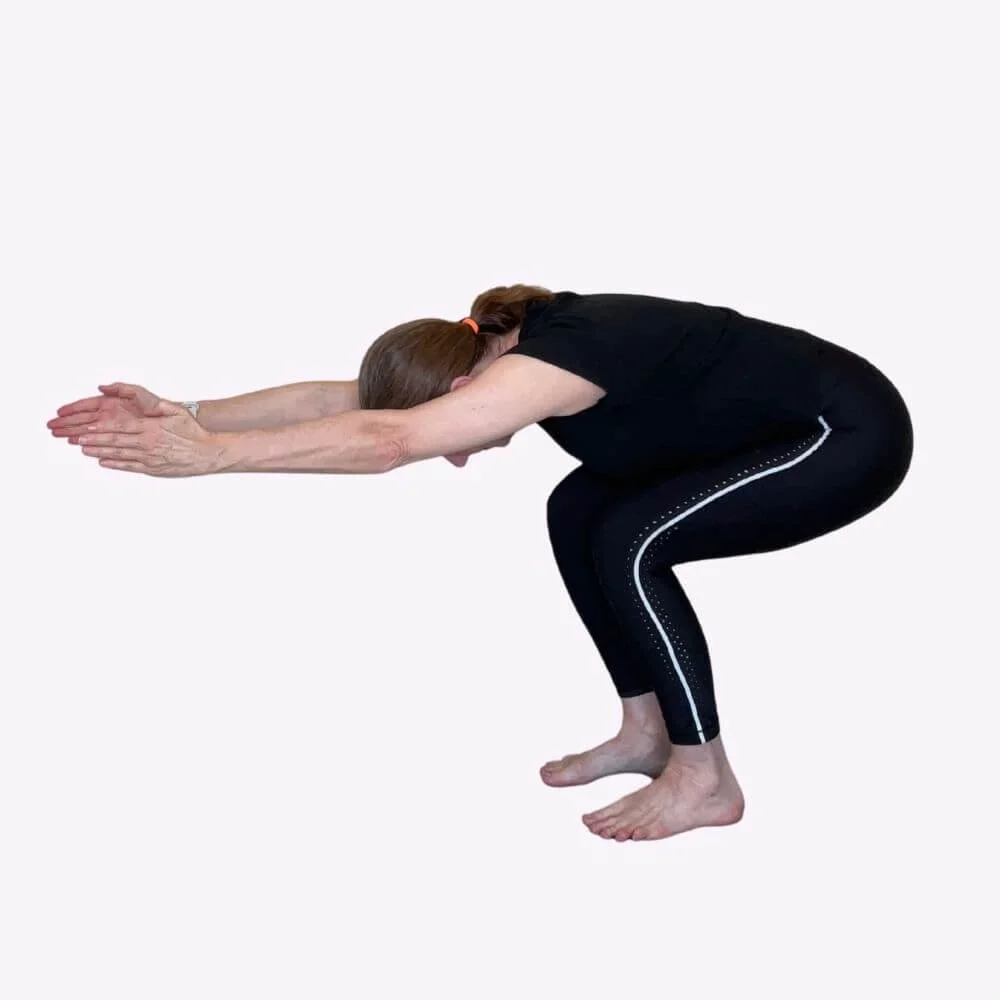
Sanskrit: Although this pose is very different from the hands-and-knees version, many yoga websites also call it Bhallukasana. Because it looks more like Chair pose, my preference would be to call it Downward-Facing Chair or Ado Mukha Utkatasana.
When I started practicing yoga in 2001, this pose was called “Power Chair” and was considered a challenging variation of the Chair pose. It was introduced to yoga in the mid 1990s during the original power yoga trend. At that time, it wasn’t given a new Sanskrit name; we continued to use Utkatasana when referring to it. We, as a community, were not yet creating Sanskrit names for fitness moves and often deferred to Light on Yoga or the Ashtanga curriculum for them. If you want to try teaching it to your students, just offer a regular chair pose as an option for those who struggle. My best guess is that the popularity of Children’s yoga in the last ten years has introduced new and creative variations and names to some of our poses, like this version of Bear.
How to Practice Standing Version Bear Pose
Start in Mountain with feet hip-distance apart or a little wider.
If your feet naturally flare outward some, this is OK; not everyone is built for their toes to point straight forward in poses.
Bend the knees and reach forward with the arms.
Breathe into your ribs.
Engage your core.
Attempt to sit back, as if sitting in a chair.
Keep your knees tracking with your toes.
Press evenly into the big-toe mounds and outer heels.
Once in Chair, take a breath and then on the next exhale, bend your knees more deeply and fold forward, bringing your torso towards your thighs.
If possible, place your torso on your thighs; if not, float as closely to the thighs as you can manage.
Reach your arms over your head in line with your spine.
Imagery cue to encourage gluteal engagement: Imagine your sit bones reaching towards your knees.
Common Alignment Issues to Correct
Make sure students’ knees are tracking with their toes. People are built differently, so some students’ hips may turn out slightly, as will their knees and toes. Avoid correcting foot position; cue from the hips first, and let the knees and toes follow. This will keep the knees safer.
Encourage students to keep their heads and necks aligned with their spines so they are gazing at the floor. Many students will want to lift their heads and look at the teacher. In fitness rooms with mirrors, some students will lift their heads and look at themselves. In either case, they are pinching the back of their necks and also reducing core engagement.
Notice if anyone is rounding their spine. Remind students to elongate their spine and reach long with their arms.
Hello, World!
Benefits of Bear Pose
Choose this version of the Bear pose if you want a challenging, powerful pose to strengthen your legs.
Strengthens quadriceps
Strengthens gluteals
Builds core stability and strength
Improves endurance
Stretches the shoulders
Develops balance and body awareness
Increase energy
Practicing Balancing Bear Pose
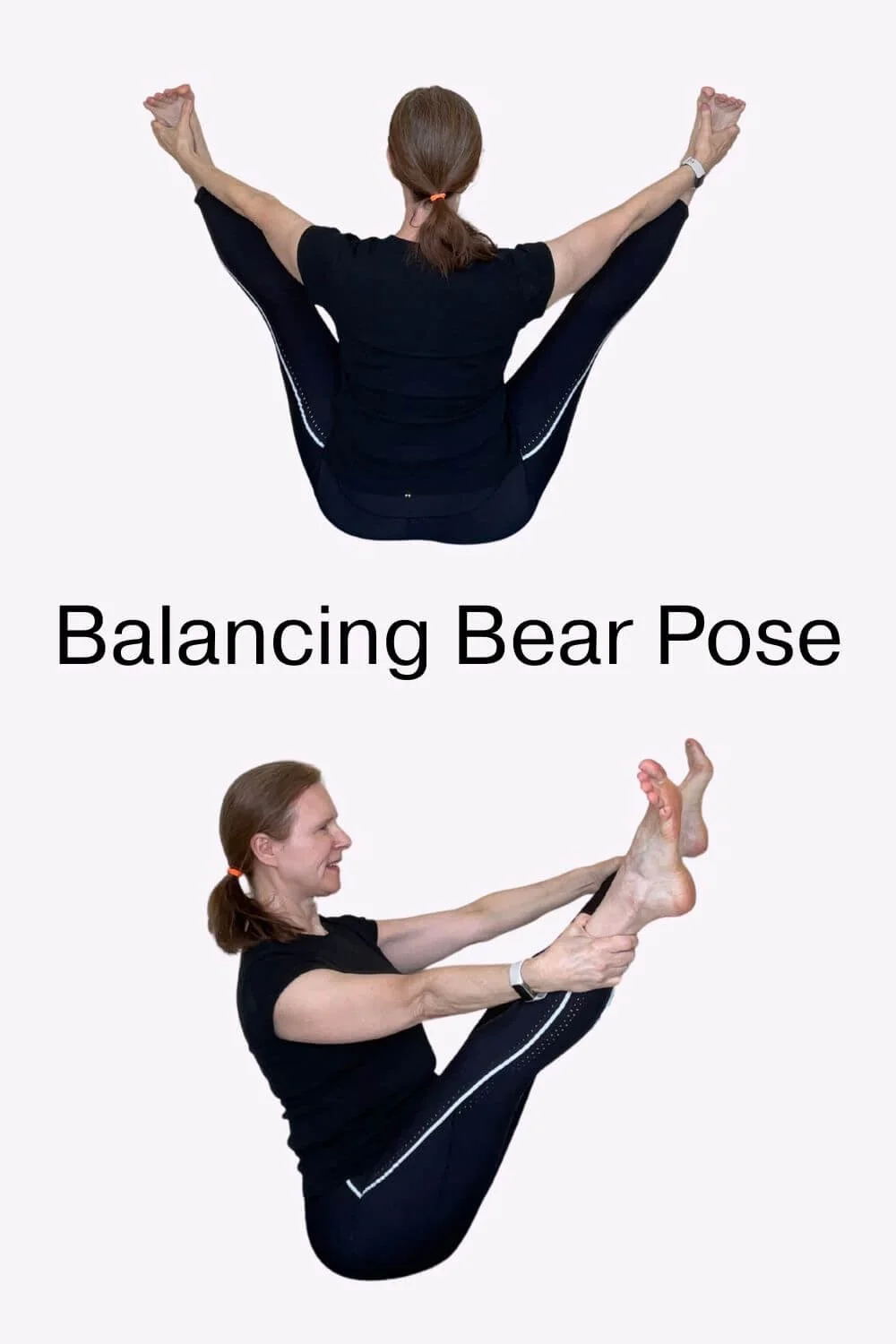
Sanskrit: This pose is known by two different Sanskrit names depending on the yoga school or lineage you learn it from.
Merudandasana
Merudanda = Spinal Column
Urdvamukha Prasarita Padottanasana I
Urdva = upward, mukha = facing, prasarita = spread
pada = leg/foot, uttana = intense stretch
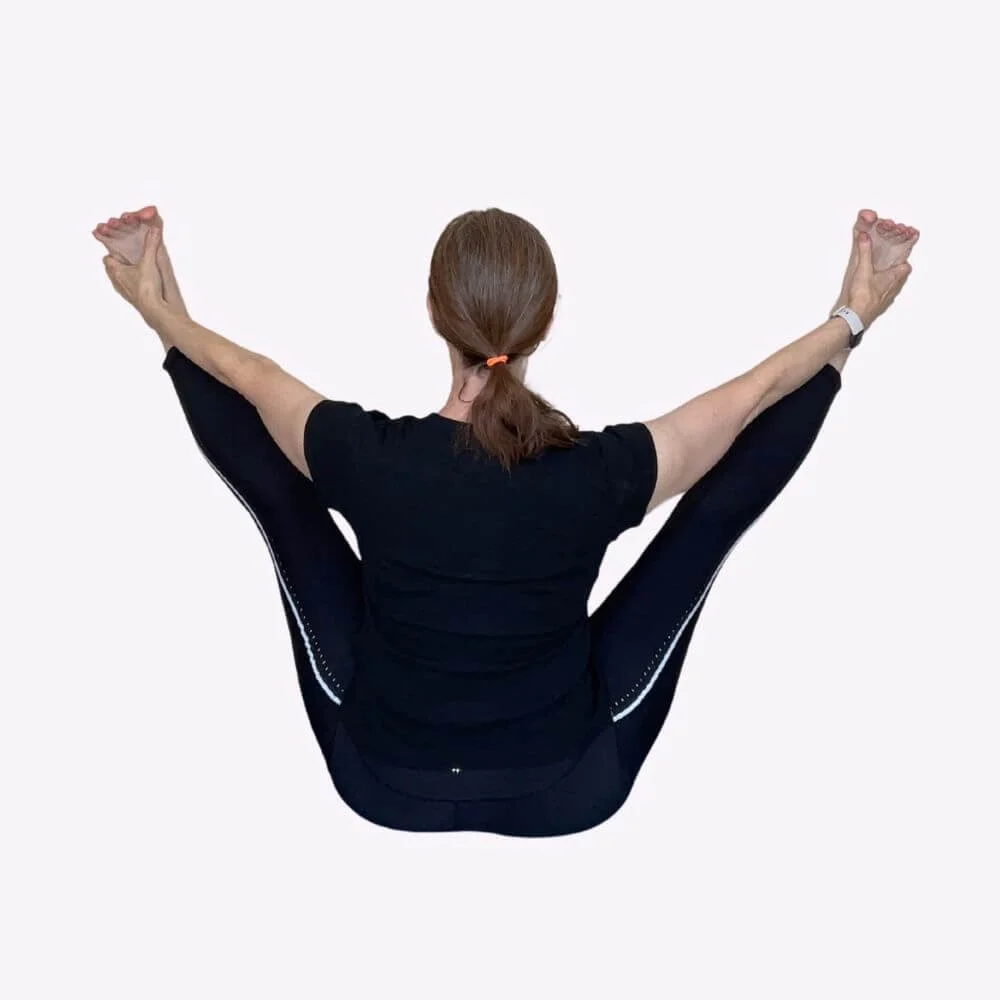
Many of us who have been practicing for years think of this version when we hear the term Bear pose. For many years, it was the only pose with the word “Bear” in its name. Balancing Bear is not in Iyengar’s Light on Yoga, and it may have originated as a variation of Ubhaya Pandangustha (Both Big Toe Hold). A common challenge flow includes going from Boat to holding both big toes and then spreading the legs into Balancing Bear.
How to Practice Balancing Bear Pose
Start seated in Staff Pose with your legs stretched out in front of you.
Bend your knees and place your feet flat on the mat.
Place your hands behind your thighs.
Engage your core and begin to lean backward.
Breathe into your ribs.
Let your toes come off the floor and balance on the back side of your sit bones.
Stretch your legs long and wide (keep your knees bent as a modification).
Hold onto the backs of your thighs or calves. If your hamstrings allow, hold onto your big toe mounds or the sides of your feet.
Common Issues to Correct
Most online photographs of this pose show the yogi with straight legs, holding onto their big toes or feet. When students attempt this traditional version of the pose, most can’t do it, and they round their backs to hold onto their feet. In this case, it is better to ask students to bend their knees and even hold on behind the thighs rather than the feet. The risk of injury to the hamstrings and/or low back is high when students force this pose.
Another note of caution: Make sure all students attempting this pose are far enough away from the wall or any gym equipment so that if they accidentally lose their balance and fall backward, they won’t hit their head.
Benefits of Balancing Bear Pose
Choose this pose for core and spinal column strength and stability.
Core strength
Quadriceps and TFL strength
Spinal stabilization and strength
Focus and Concentration
Stretch of the hamstrings
Why Are There Multiple Bear Poses? Which one is right?
Yoga is continually changing as each generation of yogis creates and practices what works for them. There is no “original” set of yoga poses, as different lineages in India practiced different poses and breathwork.
As yoga became popular in modern times, it continued to be influenced by fitness trends, dance, and gymnastics. Yoga schools around the world have added new poses and given them Sanskrit names. As new poses originating in fitness make their way through yoga schools and teacher trainings, they are often given different names. It takes a while for the yoga community to settle on the same name for a new pose.
Another influence on new poses and names is the online cataloging of yoga poses that began around 2010. Over the years, multiple popular sites have created huge databases of poses and their details. Over time, one name will emerge as the most accepted for a pose.
Keep learning, keep teaching, and trust that your voice matters. The more you share your unique way of teaching, the more lives you’ll touch. Feel free to reach out if you have questions or need support for your teaching. 🧘♀️ ♢

Pin Me!
➪ For more teaching yoga tips, check out my book on Amazon
➪ To receive 6 hours of free CEUs, join my video course:
FREE Mixed Level Teaching Essentials Course!
➪ Check out my video library! Over 400 videos with accessible classes, including modifications.
