
Yoga Themes for Yoga Classes: 23 Practical Ideas Teachers Can Actually Use

Becca is the author of Teaching Yoga: Creative Cueing for Safer Mixed Level Classes. A long-time studio owner and teacher trainer, she now teaches in OKC and creates resources for other yoga teachers.
Anything can be a yoga class theme, and there are no rules for how it should be presented. We need to connect it to the day's practice in some way. A well-developed theme helps students deepen their understanding of yoga practice. Practical yoga theme ideas can be drawn from many areas, including references to internal experiences, the changing seasons, celebrations, holidays, yoga philosophy, and the Chakras.

Remember, you don’t have to have a theme for every class; many well-known teachers don’t. We need to be our authentic selves when teaching yoga, so don’t feel pressured to include a theme unless you love it. Some yoga teacher trainings promote the inclusion of yoga themes, but honestly, many beginning students are not ready to listen to them and often ignore them. Also, one theme doesn’t speak to all students, so when I present a theme, I also offer students the option to set their own theme or intention for the practice. Read on for over 20 yoga theme ideas you can easily incorporate into your classes!
Yoga Themes On Breath Awareness
Themes about the breath are a great starting point for beginning students. They can be easily incorporated into classes with little explanation. Breath awareness classes might include some of the following practices:
listening for the sound of the breath
noticing the sensations on the inhale and exhale
feeling if our inhales and exhales are even
experiencing the feeling and/or temperature of the breath moving into and out of the nostrils
focusing on breathing into specific areas of the body
Here are five yoga theme ideas incorporating breath awareness:
1. Listening to the Breath: A Gentle Practice of Noticing
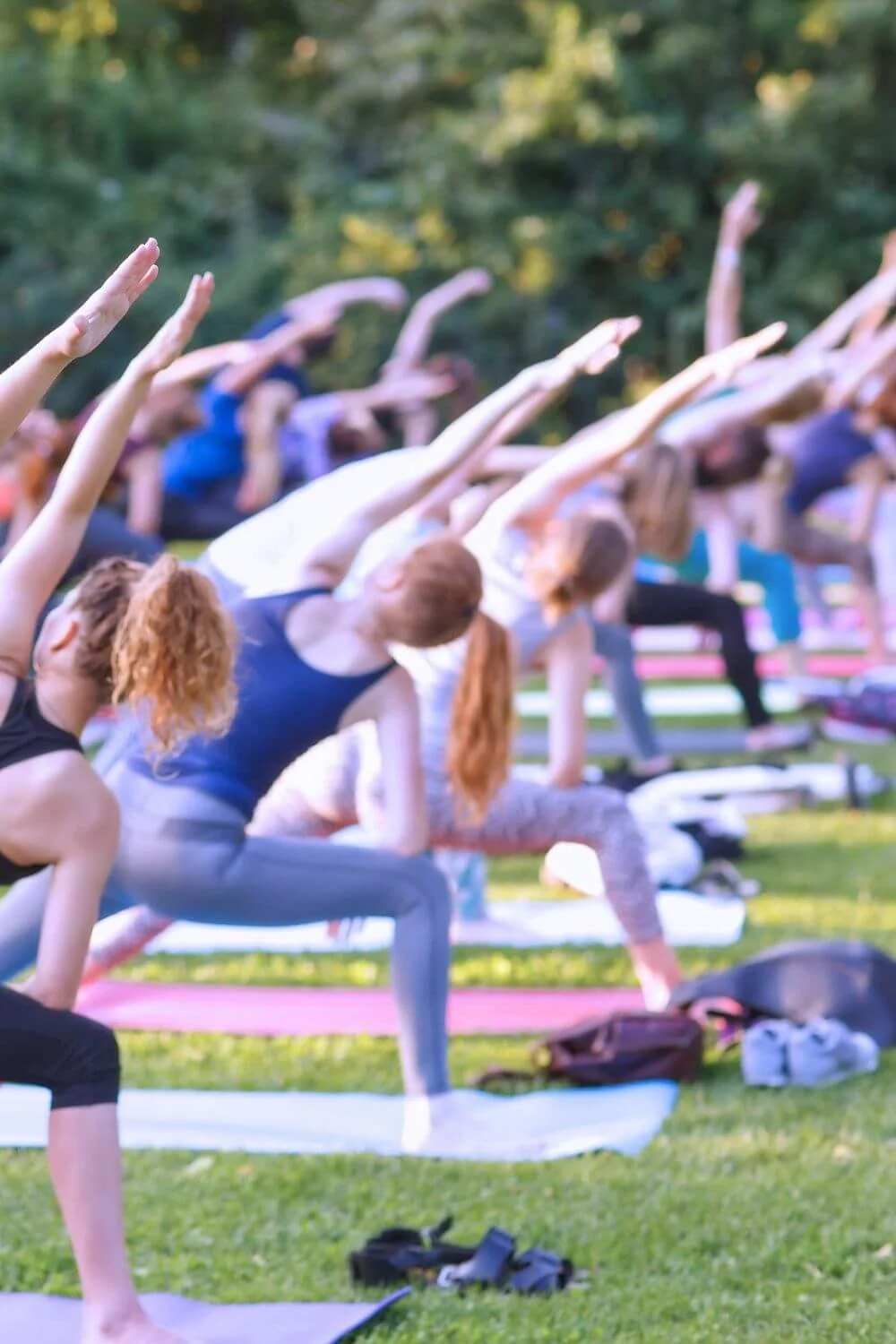
Throughout practice, notice the breath. Focus on building awareness, rather than trying to control or change the breath. Be present with the breath.
2. The Rhythm of the Breath
Let the natural rhythm of the breath guide your movements. Move only when inhaling or exhaling, practicing at a slow and steady pace.
3. Balance the Breath, Steady the Mind
Focus on gently making your inhales and exhales the same length of time throughout practice. Notice what happens to your internal chatter as the practice progresses.
4. Cool Air In, Warm Air Out
Notice the coolness of the breath at the tip of the nose on the inhalation. Then feel the warmth of the breath on the exhale. Return to this awareness throughout practice, anchoring yourself in the present moment.
5. Breathing into the Back Body
Expand the breath into your back body, feeling the ribs move. Experience the support of the breath through back-breathing in different poses.
Yoga Themes on Body Awareness
Here are some ideas for specific practices to try when using a body awareness theme:
Notice how a body part feels at the beginning of class, in the middle, and then again at the end (shoulders, hips, low back, etc.)
Focus on a different body part each week. Start with the feet and move up through the body to the knees, hips, low back, belly, mid-back, shoulders & upper back, neck, and jaw.
Encourage awareness of a healthy posture. Ask the students to pay attention to their posture. Different focuses work well with a posture theme, such as shoulder alignment, spine elongation, chest opening, and upper back strengthening.
Yoga theme ideas incorporating body awareness:

For more yoga teaching ideas, check out my book on Amazon!
6. Deep Roots: Grounded from the Feet Up
In each posture, bring your attention to your feet. Ground down into the toe mounds and heels and feel the energy rise into the legs, pelvis, and spine. Find groundedness on and off the mat.
7. Strength from the Inside Out
In the postures, start your awareness at your core, and they expand the pose energetically into your legs and arms. Let the muscles of the shoulders soften a little around your inner strength.
8. Finding Openness through Strength
Sustaining the openness of the chest and heart requires strength from the back body. Feel the strength of the upper back quietly supporting you throughout your practice. Cultivate an open heart on and off the mat.
9. Release the Shoulders and Neck: Softening to Find Strength
Throughout practice, bring your awareness to your neck and shoulders. If you find tension, then practice softening and releasing. Allow the breath to flow more easily. Let the power of the breath support you on and off the mat.
10. Elongate and Energize
Brighten your mood and energize your body by focusing on your spinal health. Elongate your spine and feel supported and aligned as the energy flows freely through your body.

Pin Me!
Yoga Themes on Mindfulness and Awareness of Our Thoughts
These ideas help students develop acceptance, kindness, gratitude, and presence as they move through practice.
Themes in this category reflect ideas like:
acceptance of where we are at now in our practice and in our lives
love for ourselves
thankfulness and gratitude for what our bodies do for us
listen and reflect on our self-talk as we practice
11. Acceptance in This Moment
Set the intention to be OK with where you truly are in the poses. Stay present with what is happening in your body right now as you move through the poses. See your strengths and weaknesses clearly on and off the mat.
12. Be Kind To Yourself
Throughout today's practice, pay attention to your self-talk. Is your inner voice helpful or hurtful? Try to speak to yourself with the same love and acceptance you would offer to a friend.
13. Gratitude for What the Body Can Do
Focus on what your body does well, rather than your physical challenges. Acknowledge your ability to breathe, bend, and stretch. Let go of any perceived need for perfection in the poses, and instead focus on gratitude for the ability to show up and put in the effort.
Yoga Theme Based on the Seasons
The seasons, the solstices, and the equinoxes all make great class themes. Noticing how the changing seasons affect us, both mentally and physically, is part of our practice of self-awareness. Our yoga practice encourages us to move through our daily lives with non-reaction, steady awareness, and love.
Try reflecting on your own experiences of the seasons as you create yoga themes. Here are my reflections on the four seasons (northern hemisphere) that might help in creating a theme of this genre that works for you:
Fall
Fall is a natural time to explore themes of balance, harmony, and symmetry in yoga practice.
Fall brings cooler temperatures and shorter days, which can affect both energy levels and mood.
As fall continues, it becomes a season of change, reflection, and preparation for colder months ahead.
Our bodies and minds may respond to reduced daylight and cooler weather by craving warming, steady movement.
As trees release their leaves, fall offers a metaphor for letting go of what no longer serves us.
14. Finding Light as the Days Grow Shorter
As daylight fades earlier each day, we turn our attention inward. This practice invites you to notice the steadiness and light that already exist within you.
Winter
The colder temperatures in winter encourage rest and inward focus.
As winter continues, yoga practices can balance deep relaxation with gentle, heat-building movement.
The solstice marks a pause and a change in direction, as daylight gradually increases again.
This turning point makes winter a meaningful time for reflection, intention-setting, and renewal.
Winter invites reflection on what may need to end and what we want to nurture as spring approaches.
15. Warming from Within
Even in the deepest part of winter, the light begins to return. During this cold season, we practice building internal warmth through steady breath and movement. We also allow the body to find quiet rest in the season's stillness.
SPRING
As daylight increases and temperatures rise, some people feel more energized, hopeful, and motivated.
Spring is often associated with new beginnings, growth, and renewed enthusiasm.
Spring begins with the March equinox, when day and night are equal in length.
This balance of light and darkness helps us transition out of winter’s stillness.
More active and challenging asana practices may feel supportive during this season.
16. Awakening Energy
With the return of the light, our practice encourages a gentle awakening, with renewed strength to meet challenges with confidence.
Summer
Summer brings longer days, warmer temperatures, and increased activity.
Many people feel more outgoing, energized, and socially engaged during this season.
With increased activity, it’s helpful to practice balance between movement and rest.
Yoga in summer can include cooling, calming, and grounding practices.
Summer offers a chance to experience fullness, vitality, and enjoyment without overexertion.
17. Embracing Vitality and Energy
The abundance and energy of summer encourage us to enjoy our practice with ease and joy. Stay present with breath for a steady, calming experience.
Yoga Themes around Holidays
Make a list of holidays that you enjoy and see what might work for you and your community. When planning a theme around a holiday, it is essential to remember that our students have different experiences, beliefs, and traditions. What might be a reminder of a happy day for one person may trigger difficult memories for another.
One of the easiest holidays to write a theme for is New Year’s Day.
18. Carrying Forward What Matters
The beginning of a new year is an opportunity to reflect on what goals, habits, and practices support us on our journey. We can carry forward what is working and let go of what is not helpful. While we practice today, let us meet this moment just as it is, and set new goals for the coming months.
Valentine’s Day is another holiday that lends itself to a variety of easy themes.
19. Loving Kindness Toward the Body
Practice cultivating compassion for yourself and your body as you practice. Take care of yourself as you move through the poses with kindness and respect.
Infusing Yoga Philosophy in our Yoga Themes
Creating themes around yoga philosophy is traditional, but less common in more fitness-based classes. Those who come to yoga class looking for a workout are usually not interested in sitting and listening to a talk on yoga philosophy. However, as teachers, we have the option of finding themes in our own study of philosophy and then introducing the concepts as we teach asana. Starting slowly like this may help pique the interest of some students. It is helpful to note that many of the ideas we find in yoga philosophy can resonate with a variety of students, as the concepts are similar to those in other philosophical traditions and spiritual teachings. As teachers, we know that yoga is more than asana. Teaching themes from yoga philosophy helps students begin to experience yoga off the mat.
Yoga teachers commonly use the Yoga Sutras of Patanjali to create themes. Keep in mind that the Yoga Sutras were not written concerning asana or yoga class, but about meditation and our internal experience. When we practice yoga and focus on our breath, we often become aware of our internal thoughts. We may find inspiration in the Yoga Sutras to deepen our awareness of our mental experience on the mat.
The Sutras include guidelines for living a spiritual life without many specific religious references. This makes creating themes with the text accessible for communities with a variety of philosophical and religious beliefs.
Here are theme ideas based on the concept of Ahimsa (Sutra 2.35) and Sayta (Sutra 2.36), part of the Yamas and Niyamas.
20. Nurturing Our Minds and Our Bodies
Ahimsa is about non-harming to ourselves and others. With a theme of non-violence towards our physical and mental selves we remind students to do themselves no harm while practicing asana. When they are in a pose, are they saying negative things to themselves? Are they pushing to the point of pain because of ego?
21. Clearing the Pathway to Our Center / True Self
Satya is about seeing the truth in ourselves and our world. There is a genuine part of us that is who we really are, our unchanging true nature. While practicing asana, we can witness our minds generating many thoughts and begin to discern which thoughts are the actual reality and which are ego, a busy mind, or negative thinking. We clear our minds so we can be present with our true selves.
The Chakras as Yoga Themes

To get started using the Chakras as a theme, pick one chakra to focus on in class. Decide on a theme that reflects the Chakras' properties and characteristics, then sequence poses associated with it. One option is to plan seven classes in a row, with each class focusing on one chakra, starting with the Root Chakra and ending with the Crown Chakra. The students gain a deeper understanding, and the package of classes also works well from a marketing standpoint. If you haven’t learned much yet about the Chakras and need some resources, then check out my list of books I like in the bibliography.
Below are a few themes on the Chakras to help you get started.
Root Chakra (muladhara) - For this Chakra, create themes of grounding and connecting with the earth. Focus on stability in the poses, especially the standing poses. A common cue yoga teachers use related to stability is the word "rooted." Deep roots stabilize and support a tree. Our practice helps us become more stable and rooted in both mind and body.
22. Discover Your Inner Stability
Stability begins with a strong connection to the ground and to our breath. As the lower body roots down, notice how the rest of the body and mind respond.
Sacral Chakra (svadhisthana) - Finding harmony, joy, and fluidity in our practice is centered in this Chakra. An example theme here might be based on creative expression, allowing time for students to explore and experience their own movements. Language that includes water is also appropriate, such as flow/flowing/fluidity, dive/diving, tapping into the well, float/floating, bathing.
23. Tap into Your Creative Well
Imagine drawing guidance from a deep inner well of knowledge and creativity. Let your movements feel fluid like water moving around an object. With each breath, pause and give yourself time to feel what internal prompts are surfacing.
Teach What Works for You!
A successful yoga teacher is someone who uses various teaching methods and ideas to help students understand how to change their lives for the better through yoga practice. Changing lives is the critical work of teaching yoga, and that doesn’t require a theme. Infusing classes with themes is a tool we choose to use. It may help students understand the information we are giving them more deeply. In simpler terms, themes may help students connect the dots between a yoga practice and their day-to-day lives. ♢
➪ For more teaching yoga tips, check out my book on Amazon
➪ To receive 6 hours of free CEUs, join my video course:
FREE Mixed Level Teaching Essentials Course!
➪ Check out my video library! Over 400 videos with accessible classes, including modifications.
